Outdoor Women Strong
Strength training for women who hike, mountain bike, trail run and paddle
Build Strength for the Trail—Even If You Don't Know Where to Start
You love mountain biking, hiking, or trail running—and you want to feel stronger doing it.
Learn how to strength train, choose your weights, and progressively build strength with a four-week program you can follow at home or in a gym.
- 3 Workouts/week
- 30-40 Minutes
- Lifetime Access
- You won't be figuring it out alone. Includes one personal hip hinge video review from me, plus direct messaging when you have questions as you work through the program.
One-time payment · Lifetime access
Created and taught by Dr. Liz Koch
Physical therapist · strength coach · outdoor athlete
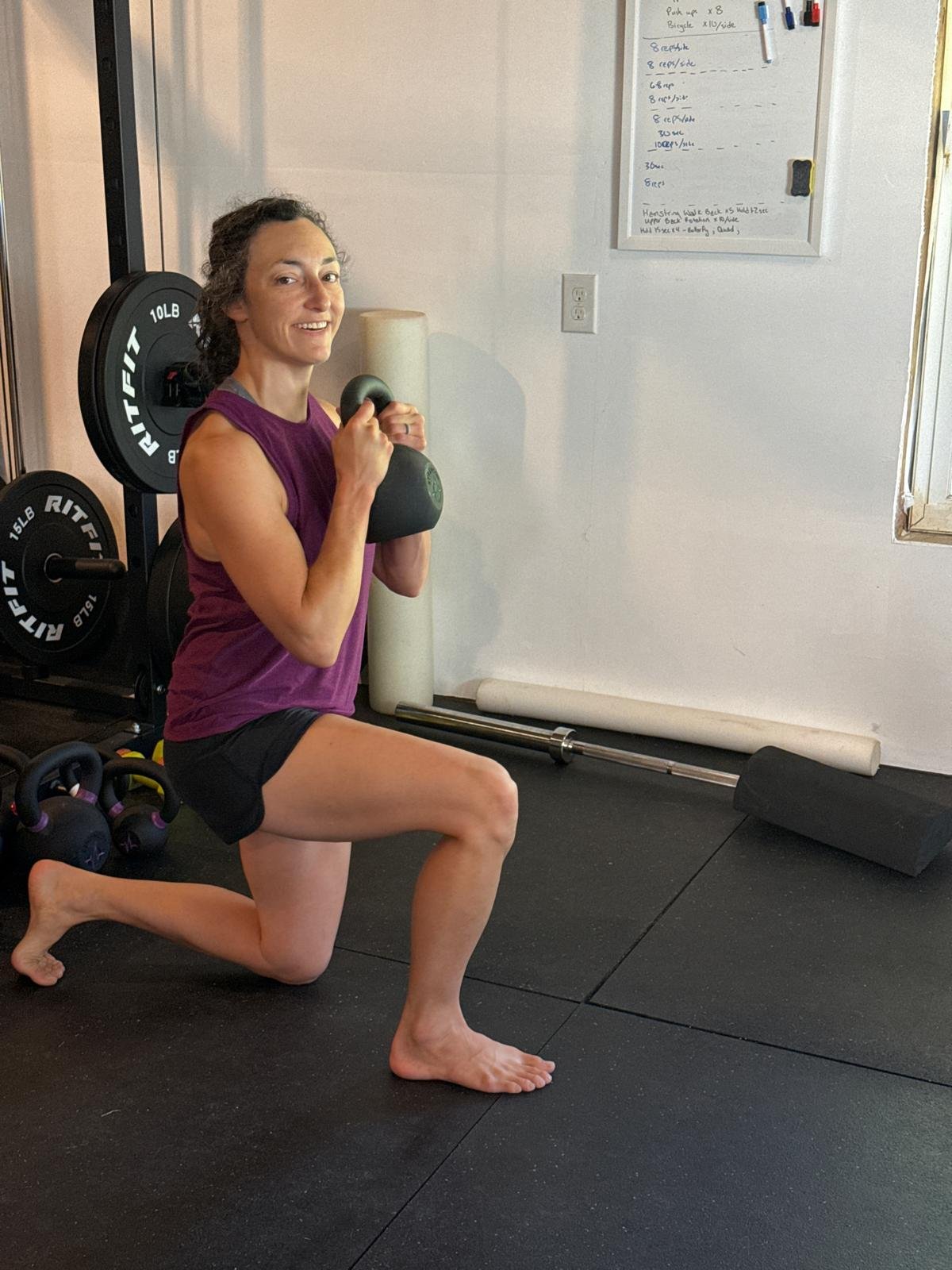
You love being on the trail. You just wish you felt stronger out there.
Maybe you want to feel stronger on long climbs, more capable when the trail gets demanding, or better prepared for your next adventure.
You don’t need another collection of random workouts.
You need to learn how to build strength—and how to keep getting stronger.
That’s what Strength Foundation teaches you.
You need to learn how to build strength—and how to keep getting stronger.
Anyone can give you exercises. I want you to understand what you're doing
A WORKOUT TELLS YOU
3 sets x 8 reps
STRENGTH FOUNDATION TEACHES YOU
- How to perform foundational strength movements
- How to choose the right weight
- How to adjust when something doesn't feel right
- How to keep getting stronger
The workouts are the vehicle. The part you keep is knowing how to make those calls on your own—this month and in two years when you’re running a program I never wrote.
You don’t need to get in shape before you start. You don’t need to already know how to lift. That’s what Foundation is for.
What you'll actually know at the end of four weeks
- Why that movement is in your program
Learn the purpose of hinges, squats, pulls, presses, and core exercises—and what to pay attention to as you practice them.
- What to pay attention to during a set
Useful cues and a sense of where effort should show up, without chasing one “perfect” position.
- How to use RPE to judge challenge
A simple, portable way to answer “was that hard enough?” that works with any weights you have
- How to choose, hold, or change your resistance
A repeatable decision — increase, maintain, or decrease — instead of using the same dumbbells forever.
- How to use a modification instead of forcing a movement
Alternatives are part of training, not a step backward.
- How progressive strength training moves forward
What “progression” means in practice, so week five doesn’t look like week one.
Here’s one thing you’ll learn, right now
How do you know whether you’re lifting enough weight?
One tool I teach is RPE—rating of perceived exertion. It helps you judge how challenging a set feels.
6
7
8
9
10
4+ reps left
3 reps left
2 reps left
1 rep left
nothing left
For example, if your program says 8 reps at RPE 7, you should finish feeling like you could have completed about three more good repetitions.
If you could have done five or six more, the weight may be too light.
Learning how to make those adjustments is part of getting stronger—and it’s a skill you can use long after these four weeks.
Four weeks, built to stack
Each week has a movement focus and a learning focus. They’re designed to build on each other, not to be four unrelated workout themes.
WEEK ONE
Control & Stability
Core + glutes
Slow down and notice. The goal this week isn’t finishing the reps — it’s starting to feel what your body is actually doing while you do them.
WEEK TWO
Connection & Pulling
Core + upper body pull
Build real pulling strength while learning where you feel the effort and how the movement gets created — without chasing one correct posture.
WEEK THREE
Hinge & Load
Hip hinge + RPE and loading
Learn the hinge, then connect movement quality to the weight in your hands. You’ll learn to use RPE to decide whether your weight is too light, about right, or needs to change.
WEEK FOUR
Integration & Strength
Squat + overhead press
Bring squat, press, hinge, pull and core together — and see that the point was never memorizing twelve workouts.
This is what training inside Foundation looks like
The program lives in the OWS app.
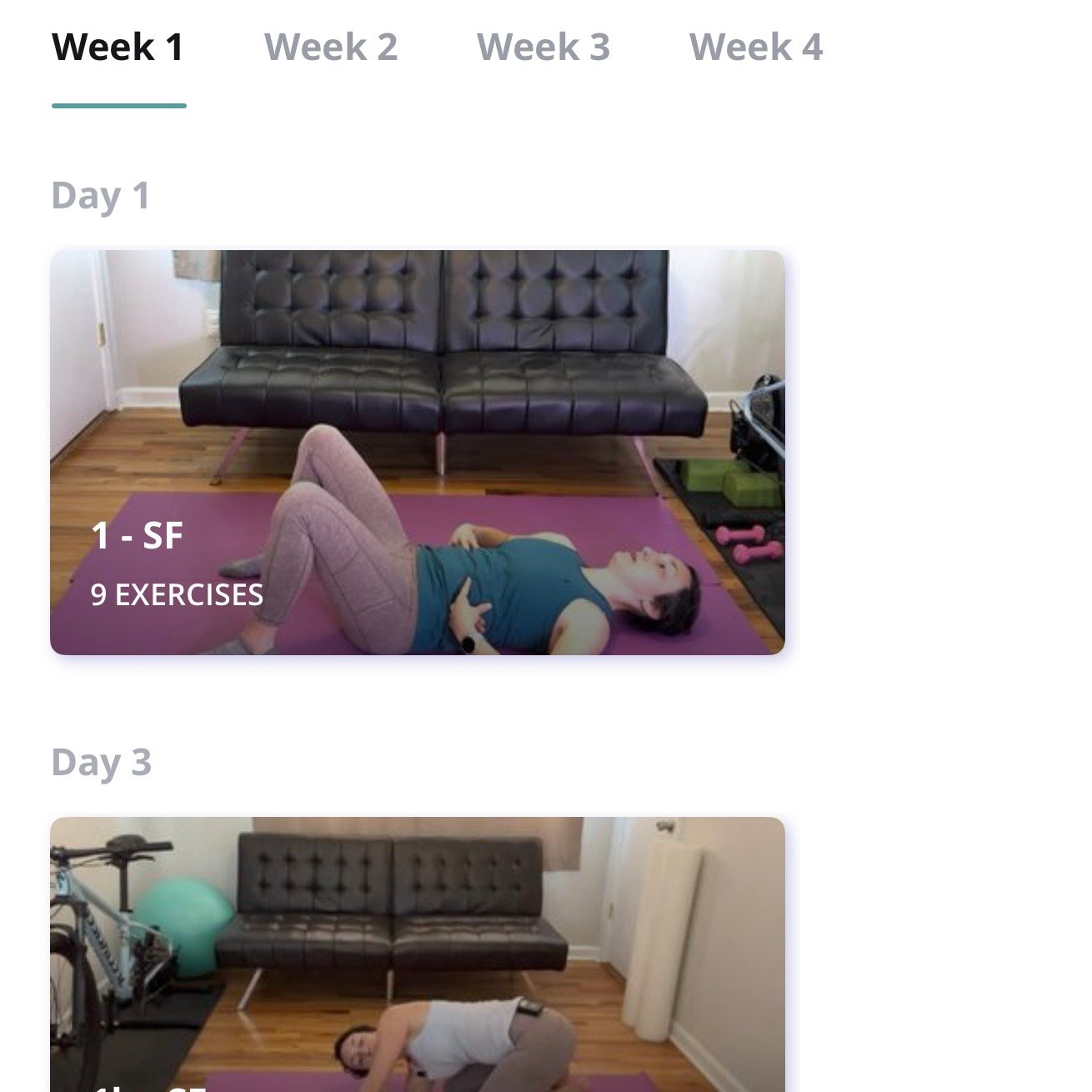
Your week, laid out
Three workouts, in order, with sets, reps and your RPE target for each movement.
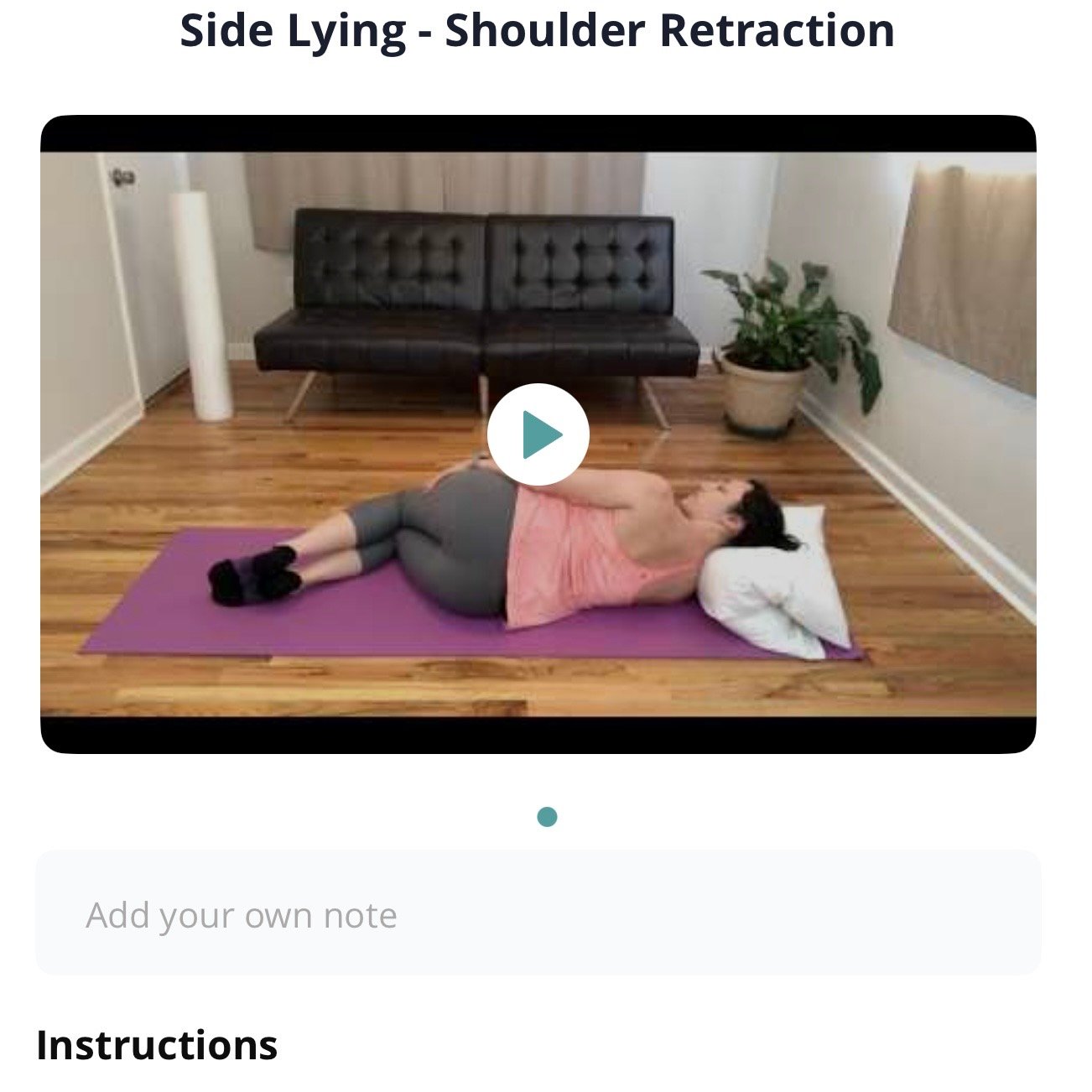
Every movement demonstrated
A short video and written cues for what to pay attention to, right where you need them.
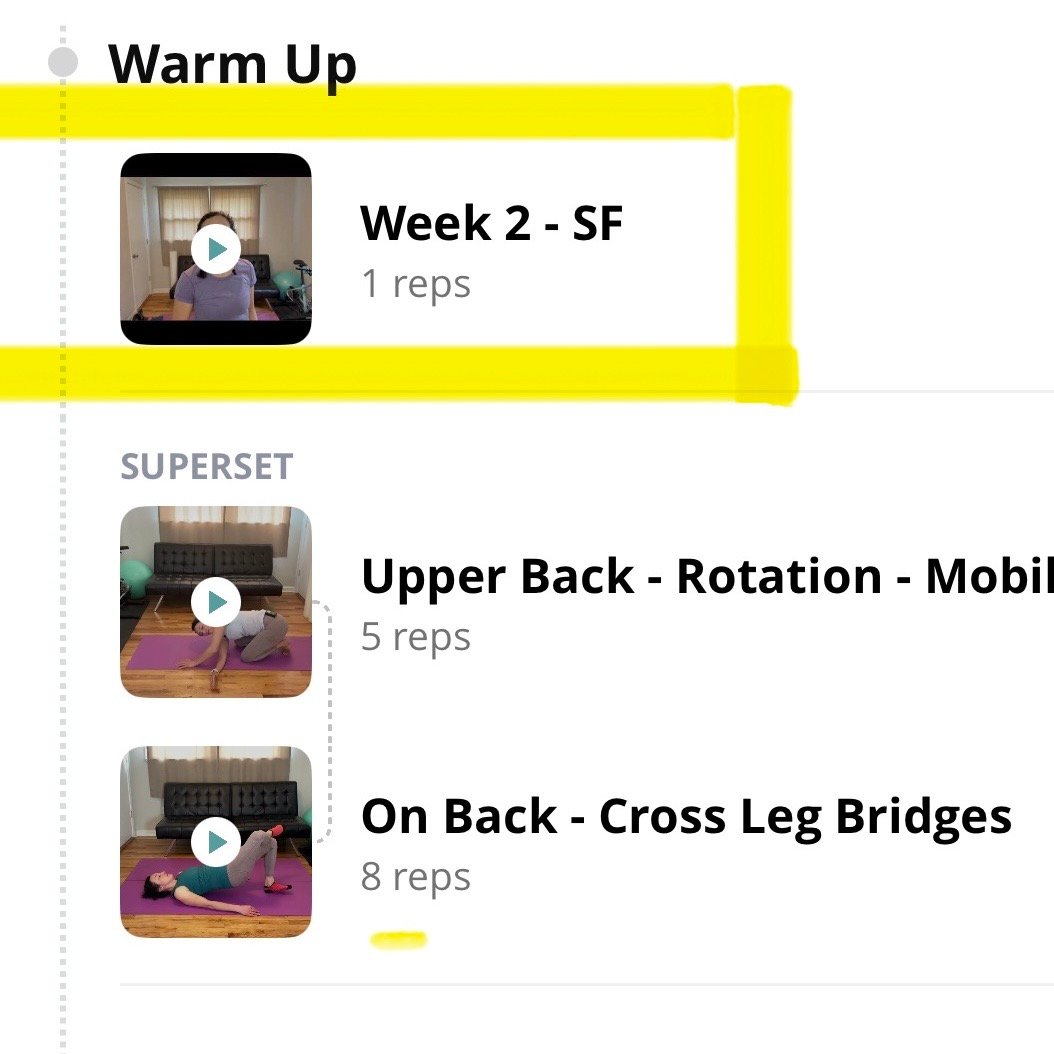
Liz teaching, week by week
Short lessons placed where the information becomes useful – not a course to get through first.
What's Included
- 4 weeks of progressive programming—3 workouts a week , roughly 30-40 minutes each
- A short teaching video each week, tied to that week's learning focus
- Exercise demonstration videos and cues for every movement
- "When something doesn't feel right" — a short lesson on adjusting without abandoning the session
- An optional Week 3 hinge check-in: send Liz one video, get two things to focus on
- No start date — begin when you're ready, pause when life gets in the way, pick up where you left off
- Lifetime access—run it again whenever you want
What you'll need
Dumbbells or kettlebells, resistance bands, a foam roller, and enough space to move. Having heavier options available helps as your strength progresses — that’s the point.
Ready to learn how to train?
Being active outside doesn't automatically mean feeling confident with strength training.
You can feel like you understand trail running, biking, or hiking pretty good, but still feel completely unsure holding a dumbbell.
And your body may have history
Maybe you’ve dealt with a cranky knee, an old back issue, a shoulder that’s been through PT, hypermobility — or you’ve simply been active long enough to know you don’t want to throw weights around and hope for the best.
You don’t have to treat yourself like you’re fragile. And you don’t have to pretend that history isn’t there. Strength Foundation gives you a structured place to learn how to train — with modifications built in, and permission to use them.
Strength Foundation is a general strength training program. It isn’t physical therapy, a diagnosis, or treatment for a specific injury or condition. If something in your body needs individual medical attention, that’s a conversation for your own provider — and it’s the right call.
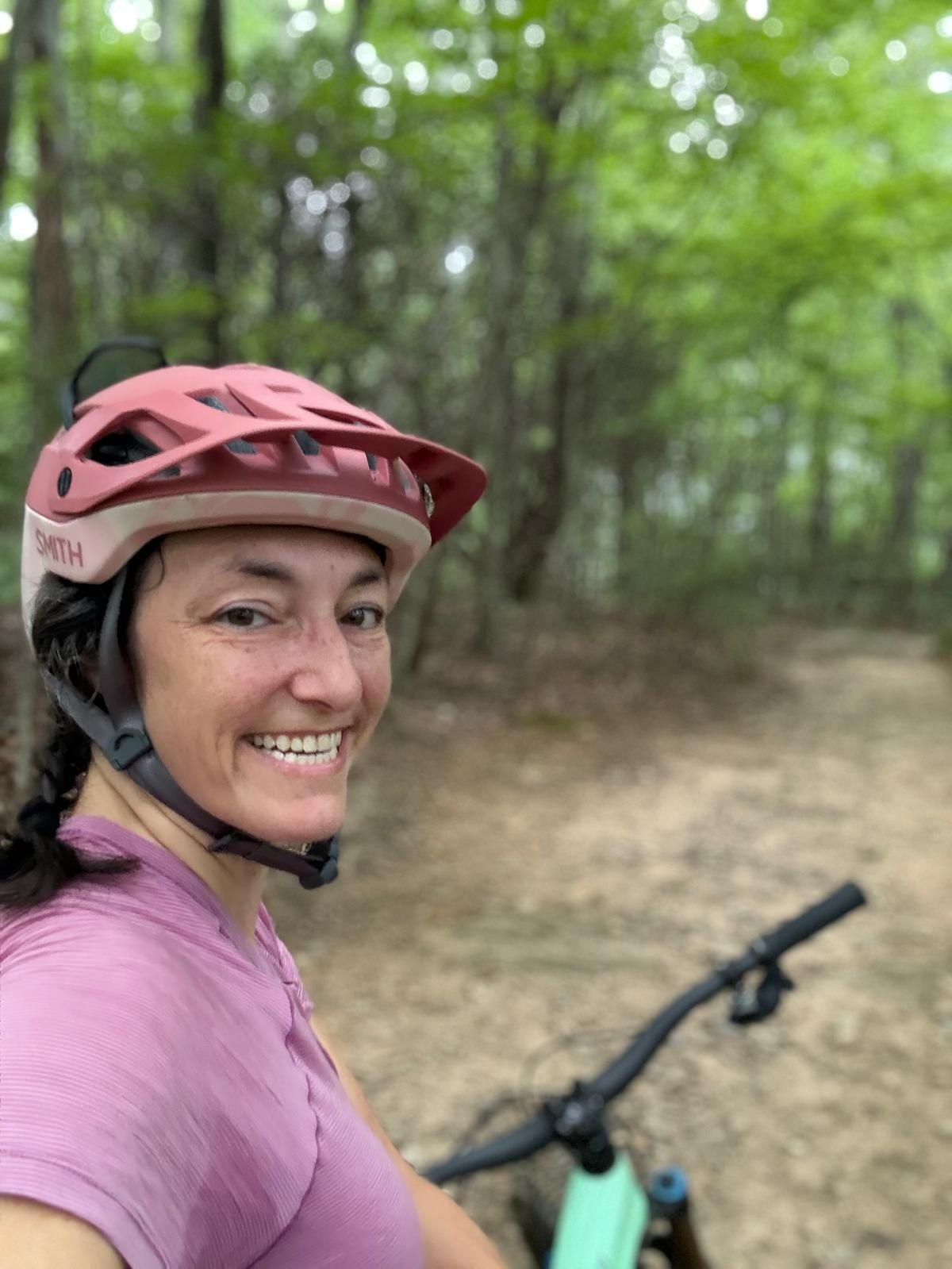
WHO'S TEACHING THIS
Dr. Liz Koch, DPT
I’m a Doctor of Physical Therapy and a strength coach. I’m also a mountain bike instructor, and I’m out on the same trails and rivers you are — riding, hiking, paddling, running.
And I’ve had to figure out how to train a body with its own history, more than once. So I’m not interested in handing you a list of exercises and wishing you luck. I want you to understand what you’re doing, because that’s the part that keeps working long after our four weeks are over.
Doctor of Physical Therapy
Strength Coach
PMBIA Level I mountain bike instructor
Former D1 soccer athlete
2-time international finalist, whitewater freestyle kayaking
The gym isn't the goal.
Your life outside is.
From women who've trained with Liz
-Beth, MTB
The hip hinge week changed how I used my back for the movement to actually feeling my abs and glutes with it
-Katie, Trail Runner
Is this the right fit?
Yes, if

You’re active outside and want to feel more confident with structured strength training.
You’ve done workouts before but still feel like you’re guessing
You want to understand challenge, loading and progression
You need training that fits around your outdoor life, not instead of it
Probably not, if

You’re looking for an advanced, sport-specific performance program.
You already understand progressive strength training and confidently adjust your workouts.
You want a high-intensity challenge rather than learning foundational strength skills.
Start where you are.
$97
One time · Lifetime access
4 weeks · 3 workouts a week · 30-40 minutes
Learn as you train. Keep what you learn long after the four weeks are over
AFTER THE FOUR WEEKS
Four weeks is the foundation—not the end of strength training.
By the end, the goal isn’t for you to know everything. It’s for you to understand more about how training works, feel less like you’re guessing, and be ready to keep building.
OWS Membership
When you’re ready for ongoing progressive programming built around your sport, your season, and your schedule, the membership is the natural next step. You don’t need to decide that now. We’ll show you your options when you finish Foundation.
Questions
No. You may have done strength workouts before — even for years. What matters isn’t whether you’ve lifted before. It’s whether you feel confident making the decisions behind your training. If you’ve ever finished a set and wondered “Was that supposed to be harder?” or “Should I be using more weight?”, Foundation is for you.
That’s completely fine. You’ll move faster through the movements that already feel familiar and spend more attention on the teaching. Foundation isn’t about proving you’ve never lifted before. It’s about understanding how to choose an appropriate challenge, recognize what you’re doing, and progress instead of simply repeating workouts.
Dumbbells or kettlebells, resistance bands, a foam roller, and space to move. A range of weights is helpful, since the point is to progress. Every workout has home and gym options.
Yes. It was built to work in a garage, a spare room, or a gym — whichever you’ve actually got.
Roughly 30–40 minutes, three times a week. Realistic enough to coexist with a long ride on Saturday.
There’s no start date and no cohort to wait for. Foundation sits in the on-demand section of the Outdoor Women Strong app from the moment you buy it, so you begin the day you’re ready.
Work through it in order — each week builds on the one before it. If a trip, a busy stretch, or a great week of weather interrupts you, pick up where you left off. You own it for life, so pausing costs you nothing.
There’s a short lesson in the program on exactly this. You’ll learn options like reducing the load, changing the range of motion, slowing the movement down, or using an alternative. You’ll also learn when something is outside the scope of a general strength program and is better discussed with your own healthcare provider.
No. Liz is a Doctor of Physical Therapy, and that shapes how she teaches — but Strength Foundation is a general strength training program, not treatment, rehab, or individualized medical care.
You may experience some soreness, especially when you’re doing movements or using resistance your body isn’t accustomed to. But soreness isn’t the goal. The program progresses over four weeks so your strength training can coexist with the riding, hiking, paddling, running, and other things you want your body to do.
You’ll finish with a final check-in that helps you see what you’ve learned and decide where you want to take your strength next. If you’re ready for ongoing progressive programming built around your sport, season, schedule and experience, OWS Membership is the natural next step. If Foundation is giving you everything you need for now, you can also repeat it with heavier resistance, or simply take what you’ve learned into your next phase of training.
Lifetime. One payment, and the program stays in your account.
Try Strength Foundation for 5 days. If you get inside the program and realize it isn’t the right fit for you, email info@outdoorwomenstrong.com within 5 days of purchase and we’ll refund your payment.
Not ready yet? Start with something free.
Feel Stronger on the Climb – three small adjustments to movements you already know, and how to carry them onto your next ride, hike, run, or paddle. It’s a real preview of how Liz teaches.
One guide, then a weekly note from Liz. Unsubscribe anytime.
Strength Foundation is a general fitness and strength education program. It is not physical therapy, medical advice, diagnosis, or treatment, and it does not replace individualized care from your own healthcare provider. Talk to your provider before beginning a new exercise program, particularly if you have a condition that needs individual attention.